Many individuals find themselves caught in a cycle of hard work, high taxes, and persistent financial insecurity. Despite diligently following conventional advice, true wealth often remains elusive. However, as highlighted in the video featuring Robert Kiyosaki, there’s a different path to **investing for wealth** that the rich consistently leverage. This alternative approach emphasizes the critical role of **financial education**, strategic debt utilization, and a fundamental shift in how we perceive assets and liabilities.
Kiyosaki challenges the established norms, advocating for a profound re-evaluation of our financial literacy. He argues that genuine financial understanding, rather than traditional schooling or mainstream investment guidance, is the cornerstone of building lasting prosperity.
The Core Disconnect: Traditional Education vs. Real-World Wealth
Our conventional education systems, while excelling in various academic fields, notoriously fall short in preparing students for the complexities of money management and wealth creation. Robert Kiyosaki asserts that schools teach us “nothing about money,” a deficiency he deems “pathetic.” This institutional gap leaves many ill-equipped to navigate financial markets or understand the strategies employed by the affluent.
Furthermore, what is often labeled “financial literacy” in modern curricula merely scratches the surface. True **financial education**, as advocated by Kiyosaki, involves understanding the flow of money, the nature of assets, and the strategic use of debt—concepts largely absent from mainstream schooling.
Understanding Income Types: Beyond the Paycheck
A pivotal distinction for building wealth lies in recognizing the three primary types of income, a topic rarely explored in traditional education. Kiyosaki outlines these categories, explaining why the rich operate differently to minimize tax burdens.
Earned Income: The Taxed Majority
Earned income is derived from working a job, where an individual exchanges time and effort for a salary or wage. This is the most common form of income for the majority, and it is also the most heavily taxed. Kiyosaki points out that those who advocate for “taxing the rich” often overlook that many wealthy individuals do not primarily rely on earned income.
Consequently, the very structure of earned income means a significant portion is deducted for taxes before it even reaches the individual’s bank account, limiting one’s ability to save and invest effectively.
Portfolio Income: The Flipper’s Territory
Portfolio income typically originates from the buying and selling of financial instruments or assets like stocks, bonds, or even flipping real estate. This type of income is often subject to capital gains taxes, which in some jurisdictions can be around 20% today. While profitable, it still involves transactions that trigger taxable events.
Both Robert Kiyosaki and his peer Donald Trump, as he notes, largely avoid this category, preferring income streams with more favorable tax treatment. This is a crucial insight for those looking to optimize their **investing for wealth** strategies.
Passive Income (Cash Flow): The Rich Man’s Game
Passive income, also known as cash flow, is the income generated from assets that require minimal ongoing effort. This is the “name of the game” for the wealthy, as Kiyosaki emphasizes. Income from rental properties, royalties, or businesses where you are not actively involved are prime examples.
Critically, passive income often enjoys significant tax advantages, effectively “bypassing taxes” in many cases, making it the most efficient path to wealth accumulation. This concept is foundational to achieving an “infinite return,” a state where assets generate cash flow far exceeding the initial investment without significant tax erosion.
The Strategic Use of Debt: A Rich Man’s Tool
Contrary to the pervasive advice to “get out of debt,” Kiyosaki and other wealthy individuals strategically utilize debt as a powerful financial instrument. He highlights that following President Nixon’s decision in 1971 to take the dollar off the gold standard, money effectively “became debt.” Therefore, understanding how to use debt is paramount for **investing for wealth**.
The rich employ debt to acquire income-generating assets, such as real estate. This allows them to leverage other people’s money to build their asset base, reduce their taxable income through deductions (like interest and depreciation), and ultimately increase their net worth. By contrast, the poor and middle class often use debt to purchase liabilities—items that cost them money—leading to financial strain.
Redefining Risk: The Investor, Not the Investment
Many perceive certain investments, like real estate, as inherently risky, opting instead for what they consider “safe” options like ETFs or diversified portfolios of stocks and bonds. However, Kiyosaki presents a provocative perspective: “you are the risk, not the investment.” Your level of **financial education** and personal skill directly dictates the risk associated with any venture.
Blindingly entrusting your money to Wall Street or relying solely on a job where employment security is uncertain can, paradoxically, be far riskier than actively learning and investing in assets. He criticizes the advice to invest for the “long term” in a market driven by high-frequency trading, where individuals are pitted against sophisticated algorithms. The supposed safety of traditional pensions and 401ks has often led to significant losses, which Kiyosaki attributes to mismanagement and the actions of institutions like the Federal Reserve.
The Power of the Financial Statement: Your Financial Mirror
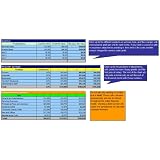
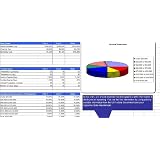
A cornerstone of **financial education** and entrepreneurship is a thorough understanding of financial statements. These documents, which are inexplicably absent from most school curricula, serve as a mirror reflecting an individual’s true financial intelligence. While many have FICO scores, very few comprehend the intricacies of their own financial standing.
For an entrepreneur or capitalist, the ability to read and manage a financial statement is non-negotiable for **investing for wealth**. This crucial document comprises:
Income & Expenses
These sections detail how much money is coming in and where it is going out. Managing these effectively is the first step in creating financial stability.
Assets & Liabilities
Assets are things that put money in your pocket, such as rental properties or businesses. Liabilities are things that take money out of your pocket, like mortgages on a primary residence or consumer debt. The rich focus relentlessly on acquiring income-generating assets.
Statement of Cash Flow
Perhaps the most vital component, the statement of cash flow illustrates the actual movement of money in and out of your financial system. For a banker assessing your creditworthiness, or for an investor planning growth, this statement reveals the health and sustainability of your financial activities far more accurately than just income and expenses.
Cultivating an Asset-First Mindset for Lasting Wealth
A fundamental shift in mindset, as exemplified by Kim in the discussion, is moving away from solely focusing on the income column to prioritizing the acquisition of assets. Instead of constantly chasing higher wages or more hours, the emphasis moves to accumulating assets that, in turn, generate income.
This “asset column” focus is the essence of cash flow investing. Once this shift occurs, financial decisions are viewed through the lens of how they contribute to your asset base and subsequently, your passive income. This is a transformative concept for anyone serious about **investing for wealth** and achieving true financial freedom.
The Intelligence of Raising Capital: Beyond Your Own Money
Robert Kiyosaki often states, “only lazy people use their own money.” This provocative declaration underscores the intelligence and creativity required to raise capital for investments. From a young age, his rich dad forbade him from saying “I can’t afford it,” instead encouraging him to figure out “how can I afford it.”
This principle forces individuals to think innovatively, educate themselves, and connect with other successful investors and entrepreneurs. Kiyosaki himself has started numerous projects without personal capital, demonstrating that the ability to raise money is a far more valuable skill than merely having it. This approach highlights that **financial education** is not just about managing money, but about mastering the art of acquiring and leveraging it effectively for **investing for wealth**.
Delving Deeper: Your Questions on Kiyosaki’s Six Rules to Investment Mastery
What is Robert Kiyosaki’s main idea about building wealth?
Robert Kiyosaki teaches that true wealth comes from financial education, strategically using debt, and understanding the difference between assets (which put money in your pocket) and liabilities (which take money out).
What are the three main types of income?
Kiyosaki identifies three types: earned income (from a job), portfolio income (from buying and selling assets), and passive income (from assets that generate money with minimal effort).
Which type of income do wealthy people prefer and why?
Wealthy people prefer passive income because it often comes with significant tax advantages and allows assets to generate cash flow, leading to efficient wealth accumulation.
How do wealthy individuals use debt differently from others?
Wealthy individuals use debt strategically to acquire income-generating assets, leveraging other people’s money to build their asset base. Many others use debt to buy liabilities, which cost them money.
What is a financial statement and why is it important?
A financial statement is a document that reflects your financial health, detailing your income, expenses, assets, liabilities, and cash flow. Understanding it is crucial for making informed financial decisions and building wealth.