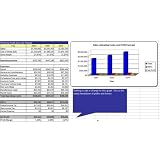
In the dynamic world of real estate investing, the ability to accurately analyze a house flip deal stands as the cornerstone of profitability. As revealed in the comprehensive video above, a typical house flip can yield a substantial return, with this specific “whol-tail” project anticipating a remarkable 250% cash-on-cash return within an estimated 60-70 day turnaround. This impressive figure underscores the potential rewards for investors who master the intricate art of property evaluation and strategic execution. However, achieving such success demands a meticulous approach, encompassing far more than just surface-level property aesthetics.
This article delves deeper into the methodologies highlighted in the accompanying video, providing an expert-level walkthrough of how seasoned investors scrutinize a potential house flip. We will unpack the essential financial considerations, the critical physical assessments, and the strategic decisions that collectively dictate a project’s success or failure. Understanding these elements is paramount for anyone aiming to navigate the complexities of property rehabilitation and secure a robust return on investment.
Deconstructing the Deal: Acquisition and Strategic Positioning
A profitable house flip begins long before any hammer swings; it originates with the acquisition strategy. The video introduces the concept of a “whol-tail” deal, a hybrid approach combining the speed of wholesaling with the value addition of a light rehabilitation. Unlike a pure wholesale deal where an investor assigns a contract without closing, a whol-tail involves taking ownership, performing minor cosmetic or functional upgrades, and then quickly reselling the property.
This particular deal, acquired for $100,000 in Midwest City, Oklahoma, exemplifies a highly desirable acquisition. The property was brought by a local realtor, indicating the immense value of cultivating robust professional networks within the real estate community. Such off-market opportunities, often from motivated sellers seeking “as-is” sales, frequently present superior profit margins compared to properties listed on the open market. Consequently, establishing relationships with real estate agents who understand your buying criteria can unlock a consistent pipeline of high-potential deals.
The “Whol-tail” Advantage: Speed and Efficiency
The “whol-tail” strategy employed here capitalizes on efficiency. By focusing on minimal yet impactful renovations, the investor aims for a maximum 90-day holding period, ideally concluding within 60-70 days from purchase to sale. This compressed timeline significantly mitigates holding costs, a critical factor often underestimated by less experienced flippers. Expedited project completion and rapid market re-entry are key differentiators in maximizing the overall return for an investor.
Critical Due Diligence: Beyond the Visual Inspection
Beyond the financial terms, a thorough physical assessment of a potential house flip is indispensable. The video expertly demonstrates how to identify potential deal-breakers early in the process, preventing unforeseen expenses from eroding projected profits. This comprehensive evaluation extends to both the property’s exterior and its internal mechanical systems.
One primary concern in many regions, including Oklahoma’s clay-rich soil, is foundation stability. While not a foundation expert, the speaker offers practical indicators such as exterior mortar separation or shifting kick-out boards. A hairline crack may not warrant immediate concern, but significant gaps—wide enough to insert a finger—signal the need for professional evaluation by a structural engineer and a foundation company, potentially costing $1,000-$2,000 for minor pier work, or substantially more for extensive repairs. Overlooking these signs can translate directly into substantial financial losses.
The Unseen Infrastructure: Sewer Lines and Major Mechanicals
The sewer line inspection, often an overlooked element, is highlighted as a non-negotiable step. As demonstrated, a sewer scope can cost a few hundred dollars but can prevent a profit reduction from $25,000 down to $15,000 if a replacement is necessary due to root intrusion or damaged pipes. Rural properties on septic tanks require even more rigorous scrutiny due to potentially higher repair costs. Similarly, evaluating the condition of windows—distinguishing between inefficient wood, acceptable aluminum, and superior vinyl—informs the rehab budget. While vinyl windows offer better insulation and market appeal, costing $150-$350 each for materials and $150-$200 for installation, aluminum windows may be retained in lower price point homes to manage costs effectively.
Moreover, assessing the functionality and age of major mechanical systems like the HVAC and hot water tank is crucial. A newer hot water tank, even if imperfectly installed, may be acceptable for a light rehab. The overarching principle is to prioritize issues that would trigger buyer concerns or inspection call-outs, thereby safeguarding the deal’s viability. These detailed inspections form the bedrock of accurate budget forecasting and effective risk mitigation in the house flipping venture.
Strategic Rehab: Maximizing Appeal Within Budget
With an initial rehab budget of $15,000, smart material choices and efficient execution are paramount for a profitable house flip. The investor strategically decides which elements to upgrade and which to retain, always with the target buyer in mind. For this $155,000 exit price point, the goal is to create a product that stands out against local competition, appealing to a first-time homebuyer.
In the kitchen, for example, original 12×12 tiles were retained due to the property’s value point, despite costing around $750 to demo for a full gut. Instead, emphasis was placed on high-impact upgrades: gold hardware on updated cabinets and a subway tile backsplash that extended to the ceiling. This backsplash, costing under $1,000 for materials and labor, dramatically elevates the kitchen’s aesthetic, offering a “nicer product than anything else in the area.” For countertops, butcher block was chosen over granite, saving $400-$500 while providing a high-end visual appeal. Although butcher block requires more homeowner maintenance, its aesthetic value at this price point justifies the choice for a primary residence.
Flooring and Finishing Touches: The Details That Matter
Flooring represents another critical decision point. Luxury Vinyl Plank (LVP), specifically free-floating LVP at around $1.50 per square foot, is preferred over cheaper glue-down options (approximately $0.70 per square foot). LVP’s ease of installation and superior aesthetic—avoiding the “shiny” look of glue-down—contributes to a higher perceived value. Lighter colors are consistently chosen, particularly in smaller spaces, to enhance perceived openness and brightness. Furthermore, the video highlights the essential, yet often overlooked, detail of quarter-round molding. This trim piece covers the necessary expansion gaps for free-floating floors, preventing buckling and providing a polished, finished look.
Even minor details, such as adding quarter-round trim around windows to cover exposed orange foam, significantly impact buyer perception. These seemingly small investments collectively enhance the property’s appeal, contributing to faster sales and stronger offers. The total rehab spending of $11,000 to date (with $6,000 for labor and $5,000 for materials) underscores the effectiveness of a targeted, impactful renovation strategy on this particular house flip.
The Hidden Costs: Underwriting for a True Profit Picture
The most common pitfall for new house flippers is failing to account for all transaction and holding costs. The speaker emphatically states, “You make your money when you buy,” emphasizing that a deep understanding of all expenses is paramount. A $100,000 purchase leading to a $150,000 sale does not equate to a $50,000 profit; the actual spread is significantly narrower once all fees are considered.
**1. Buy-Side Closing Costs:** These include a sewer line scope ($300-$500), general inspections ($300-$500), and substantial title or lawyer fees. In “abstract states” like Oklahoma, abstracting fees ($600-$1,000 for properties under $150k) update the property’s ownership history. Title insurance, a one-time fee, protects against future claims of ownership, as illustrated by the speaker’s past experience with a fraudulent sale. Lender fees also contribute, primarily through the loan origination fee. While this particular deal secured a favorable 0.5-point origination fee ($500), typical fees range from 1-3% of the loan amount, significantly impacting initial out-of-pocket expenses. For this deal, the initial cash required was $10,665.23, encompassing 10% of the purchase plus rehab and some closing costs.
**2. Holding Costs:** The longer a property is held, the more these costs erode profit. Typical monthly holding costs for a $100,000 property can range from $1,000 to $1,200. These include interest payments on financing, utility expenses (gas, electric), property taxes, insurance, and routine maintenance like mowing during growing seasons. Failing to project these accurately can result in a $5,000-$7,000 miscalculation in the final profit.
**3. Sell-Side Closing Costs:** When selling, further expenses arise. Realtor commissions are a major factor; even if you list your own property as a licensed agent, a buyer’s agent commission is typically paid. Title fees will also apply on the sales side. Neglecting these can dramatically diminish the perceived profit margin.
A crucial risk mitigation strategy involves adding a minimum 10% contingency margin to the rehab budget. As the speaker notes, “I miss stuff on every deal,” highlighting the inevitability of unexpected issues during renovation. This buffer safeguards against unforeseen expenses, ensuring the house flip project remains viable.
Strategic Exit: Maximizing Sales Price and Mitigating Risk
A successful house flip not only demands shrewd acquisition and efficient rehabilitation but also a well-planned exit strategy. The target exit price for this property is $155,000 to $160,000, aiming for a net profit of $20,000-$25,000. However, navigating the sales process involves understanding market dynamics, buyer expectations, and regulatory requirements.
Crucially, before listing, major mechanicals like the roof, HVAC, and foundation must be thoroughly inspected and confirmed to be in good condition. Buyers, especially those using conventional financing, will often request inspections, and significant issues in these areas can lead to renegotiations, substantial repair costs, or even deal collapse. Proactive assessment minimizes this risk. Furthermore, understanding the “90-day flip rule” for FHA buyers is vital. Properties purchased and resold within 90 days cannot be financed with FHA loans, a common loan type for first-time homebuyers. This restriction can significantly limit the buyer pool, underscoring the importance of strategic timing in the house flip timeline.
Market Intelligence and Contingency Planning
For accurate property valuation, investors must perform thorough comparative market analyses (CMAs). Leveraging relationships with experienced real estate agents, utilizing tools like PropStream or Batchleads, or even checking Zillow comps provides a robust valuation. Double-checking these estimates ensures confidence in the After-Repair Value (ARV) and the projected profit. Investors should not rely solely on wholesaler-inflated numbers; independent verification is key.
A robust contingency plan is also essential. For this deal, the investor’s worst-case scenario is to rent out the property, preventing a loss. This strategy is particularly effective with smaller properties, where the potential downside is more contained. High-value properties, while offering larger potential spreads, also carry substantially higher holding costs and greater financial risk, as illustrated by the example of an investor who lost money on six high-value flips due to inflated numbers and excessive holding costs. Therefore, for a first house flip, adhering to a conservative formula—ARV multiplied by 70%, then subtracting repairs, holding costs, and closing costs—provides a reliable framework for making a solid offer and minimizing risk.
Making Cents of the Flip: Your Q&A on Real Estate Investment Analysis
What is a house flip?
A house flip involves buying a property, making improvements or renovations to it, and then quickly reselling it for a profit.
What is a “whol-tail” deal in house flipping?
A “whol-tail” deal is a hybrid strategy where an investor buys a property, performs minor cosmetic or functional upgrades, and then quickly resells it, usually within 60-90 days.
Why is it important to thoroughly inspect a property before buying it for a flip?
Thorough inspections help identify potential major issues like foundation problems or damaged sewer lines early on. This prevents unexpected and costly repairs that could significantly reduce your projected profits.
What are some common “hidden costs” that new house flippers often overlook?
Common overlooked costs include buy-side and sell-side closing costs (like title fees, inspections, and realtor commissions) and holding costs (such as loan interest, utilities, property taxes, and insurance) while you own the property.
What is the “90-day flip rule” that house flippers should know about?
The 90-day flip rule states that properties purchased and resold within 90 days cannot be financed with FHA loans, which are commonly used by first-time homebuyers. This can limit your potential buyer pool.